ADAPT Agentic Disinformation Analysis & Provenance Toolkit
ADAPT.
A Hub for the Verified State of Media.
HIGH CRED
MIXED · LOW


A Hub for the Verified State of Media.
Readers face a volume and velocity of news no human can vet — saturated with synthetic media, fragmented across outlets, and shaped by sources of uneven reliability.
Millions of articles published daily; cycles outrun any manual fact-check.
LLM-written copy and image diffusion blur the line between report and fabrication.
Coverage gaps and partisan framing leave readers without a shared baseline.
Generalised distrust of all media — including outlets that remain rigorous.
ADAPT centralises news from across the credibility spectrum and runs every claim through an agent network that publishes its evidence — not just a score.
A unified interface bringing together top stories, briefings, and coverage gaps across publishers.
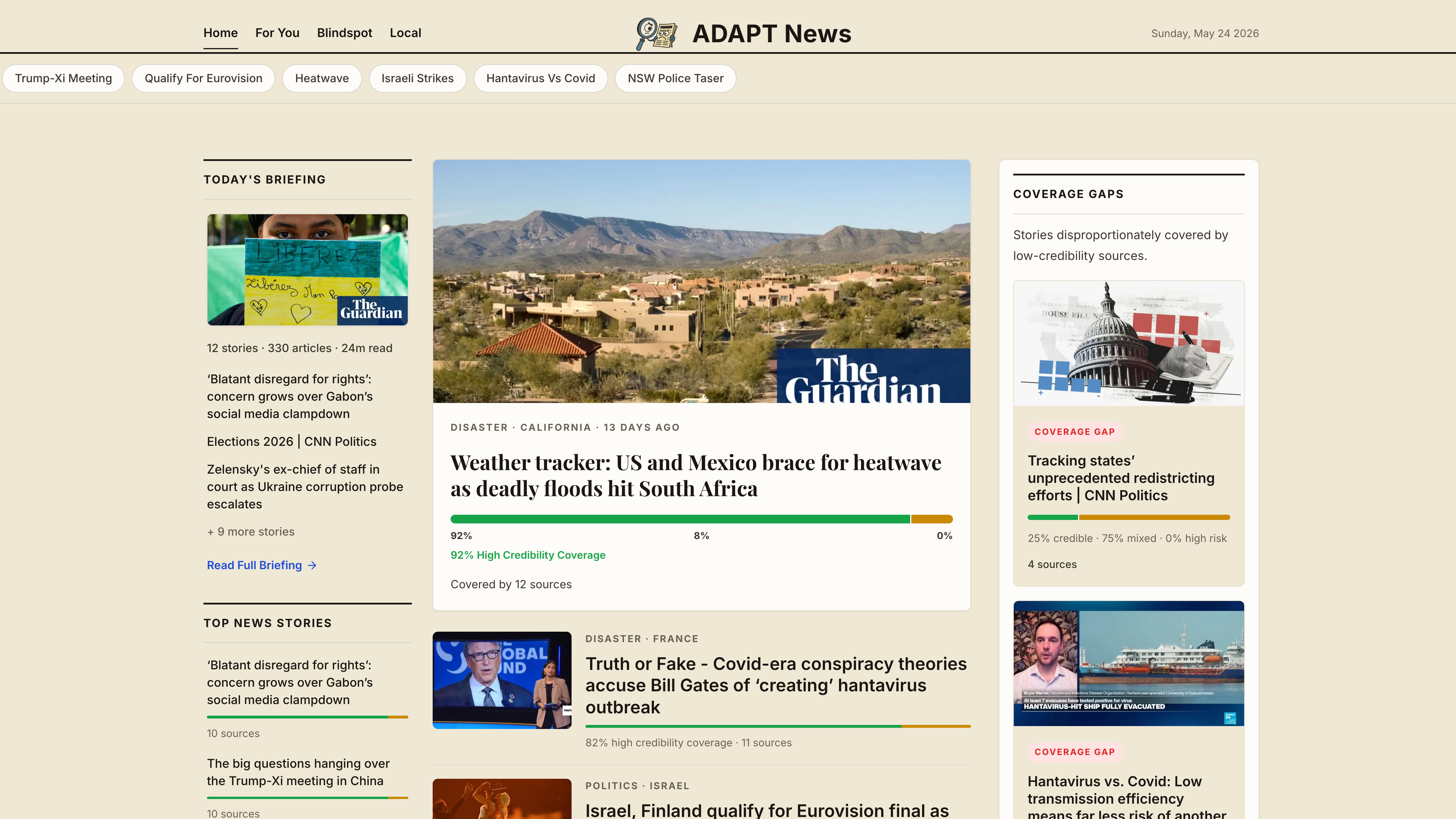
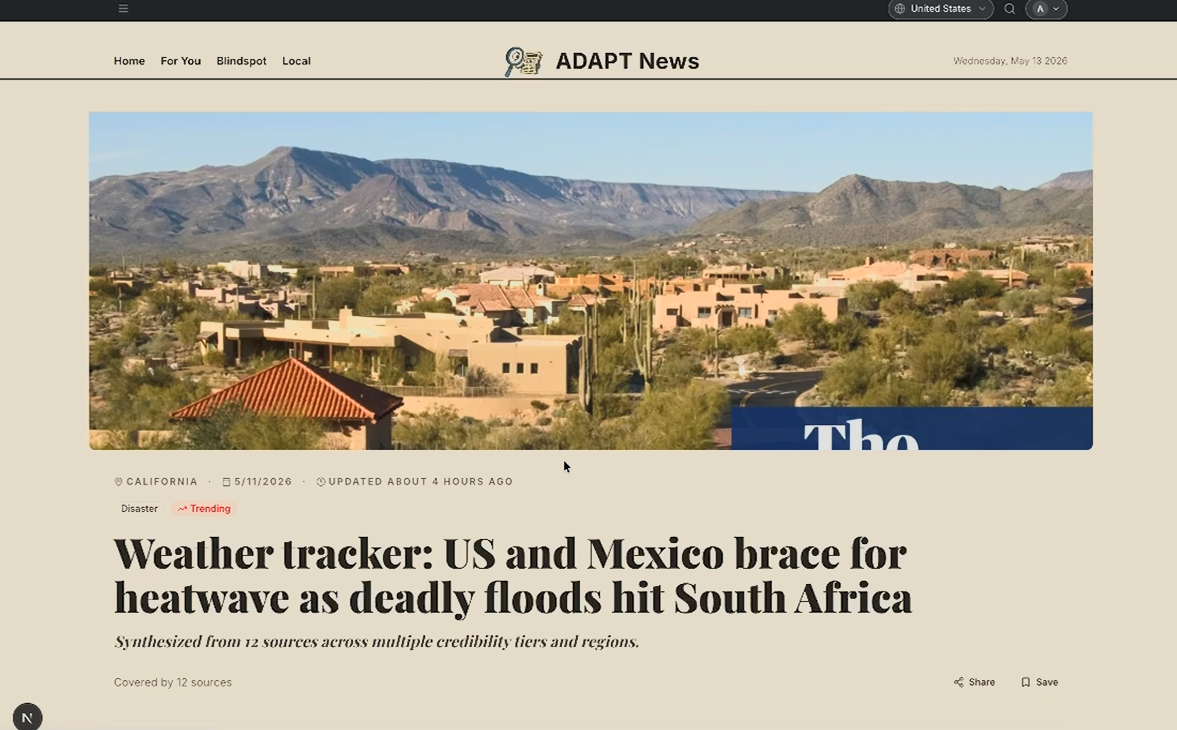
Deep dive into specific news stories with comprehensive analysis gathered directly from multiple sources.
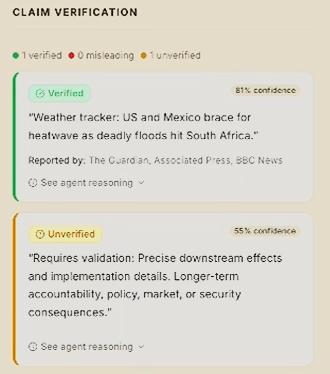
Track individual claims against aggregated context and review the exact debate process generated by the multi-agent system resolving conflicting reports.
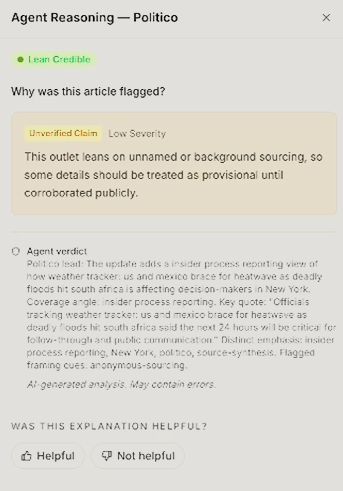
Understand how a narrative evolves over time and analyze the credibility and reporting history of publishers contributing to the ongoing debate.
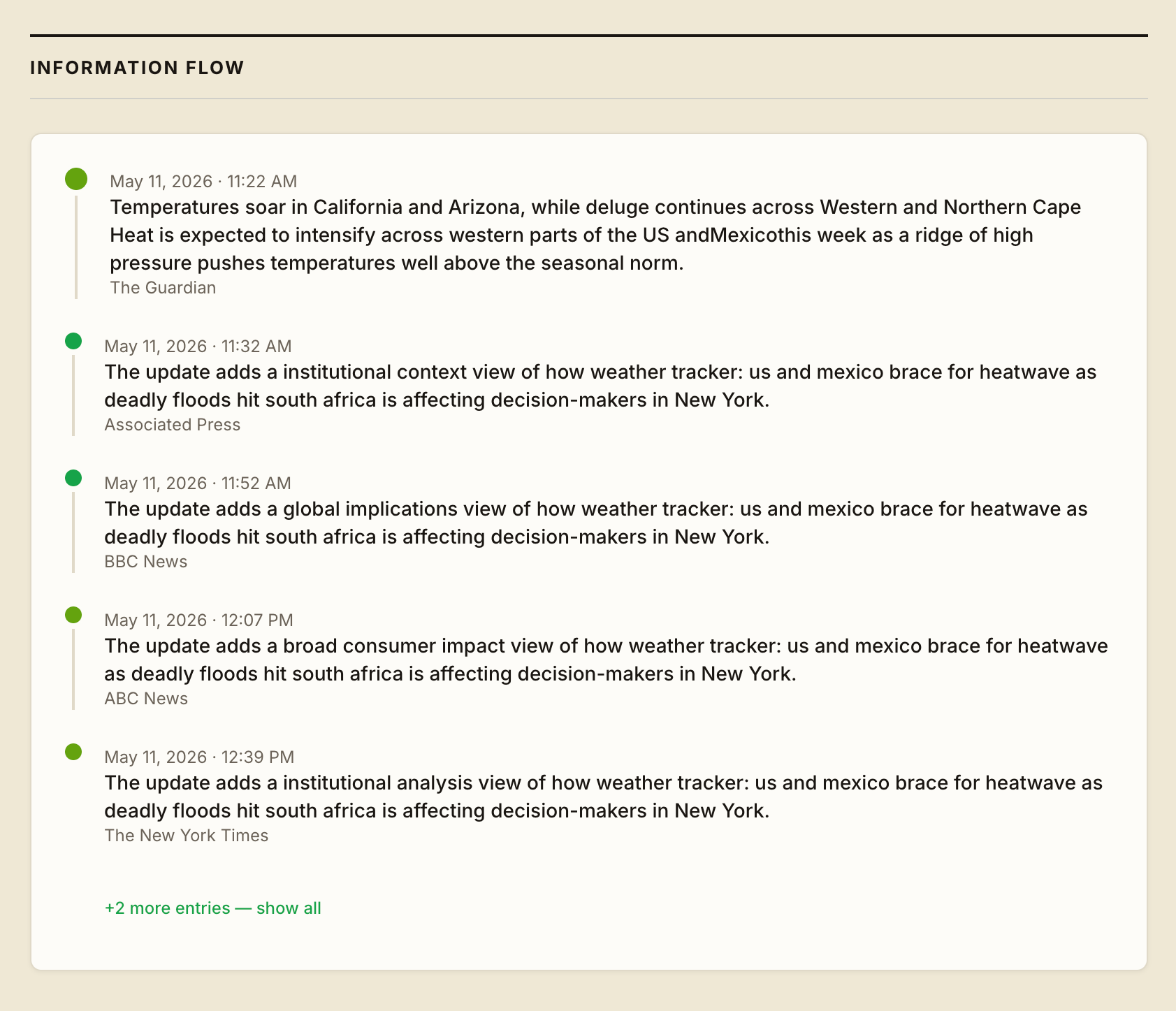
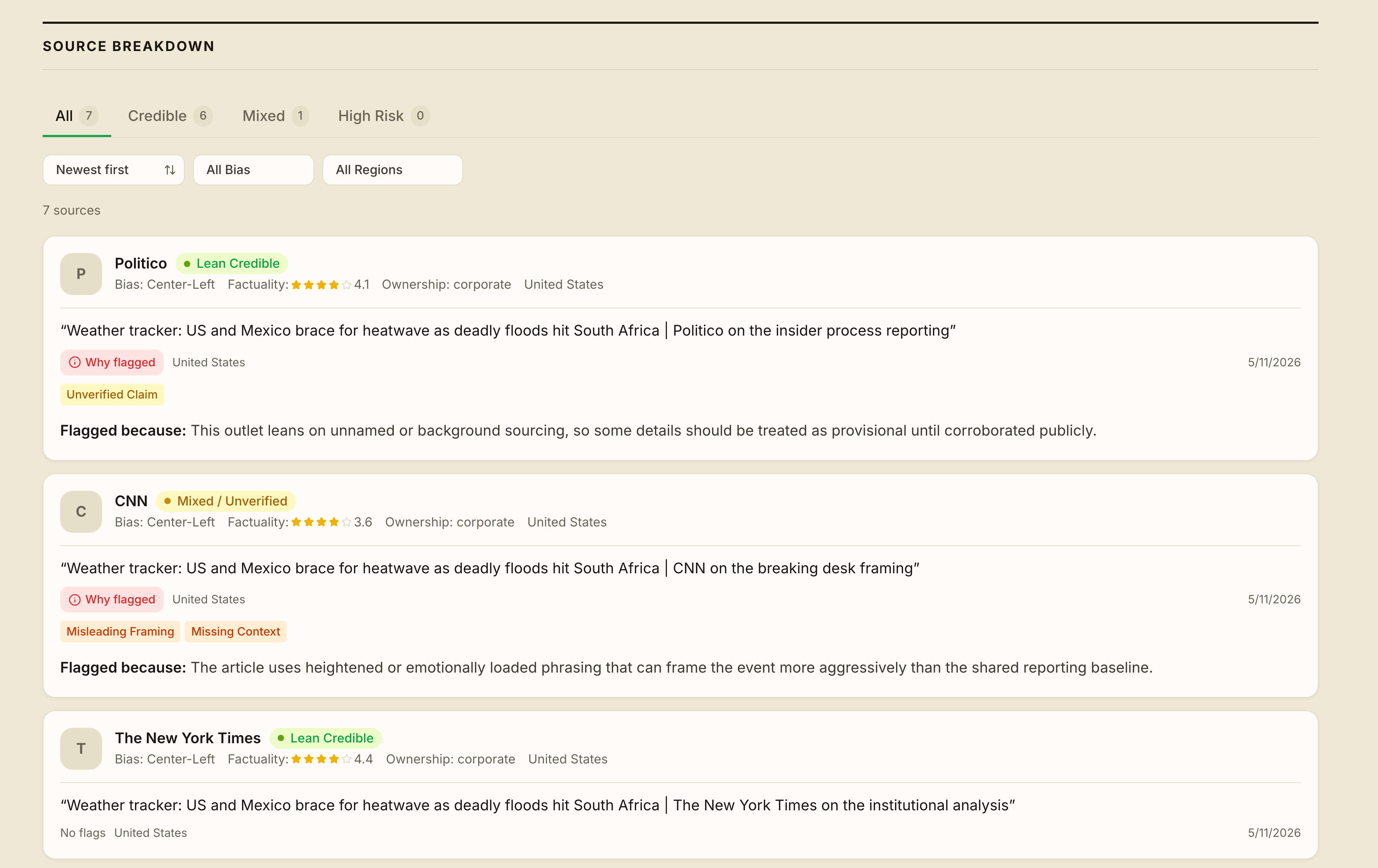
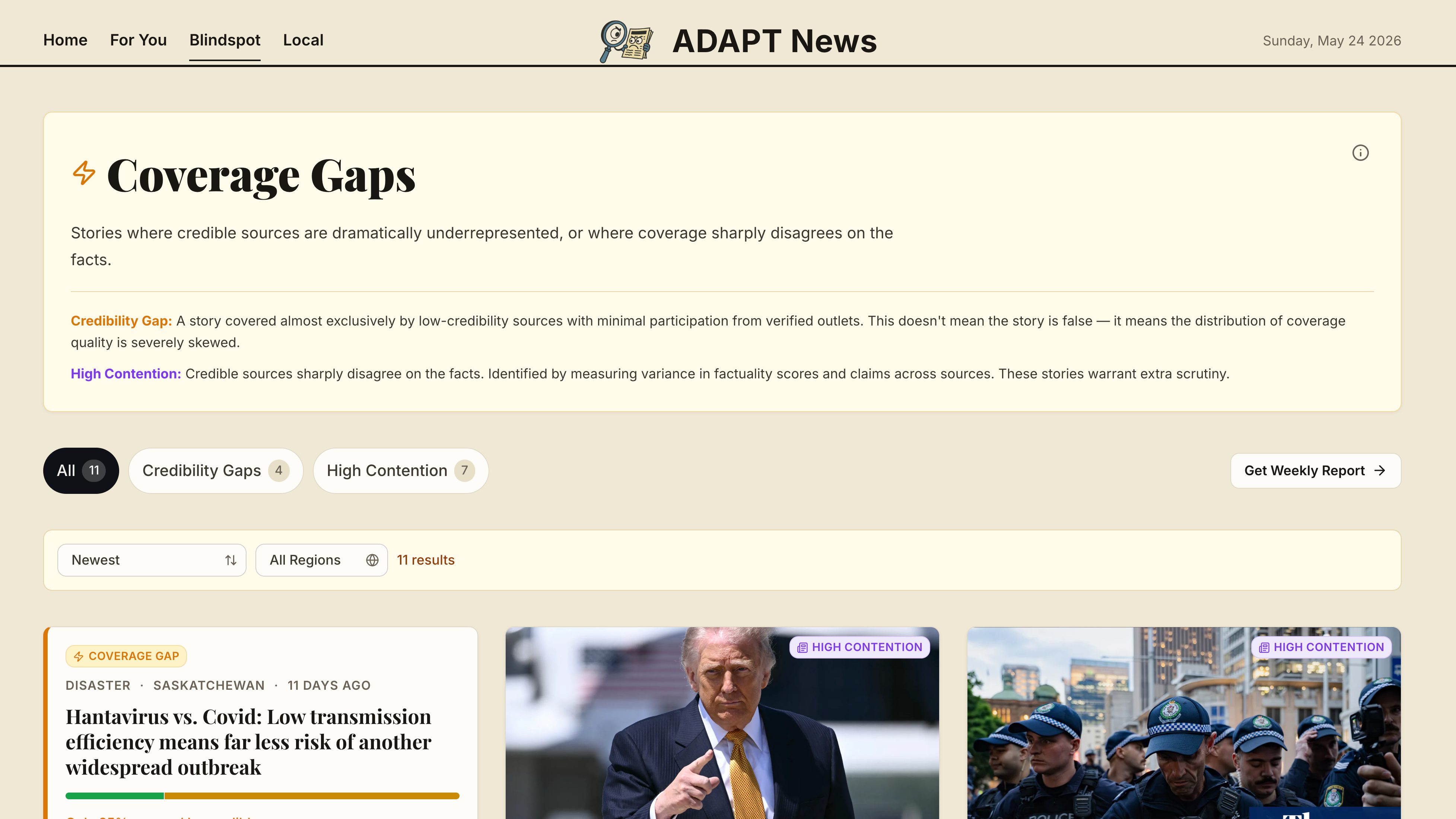
Identify coverage gaps to see what specific outlets are systematically ignoring or framing differently.
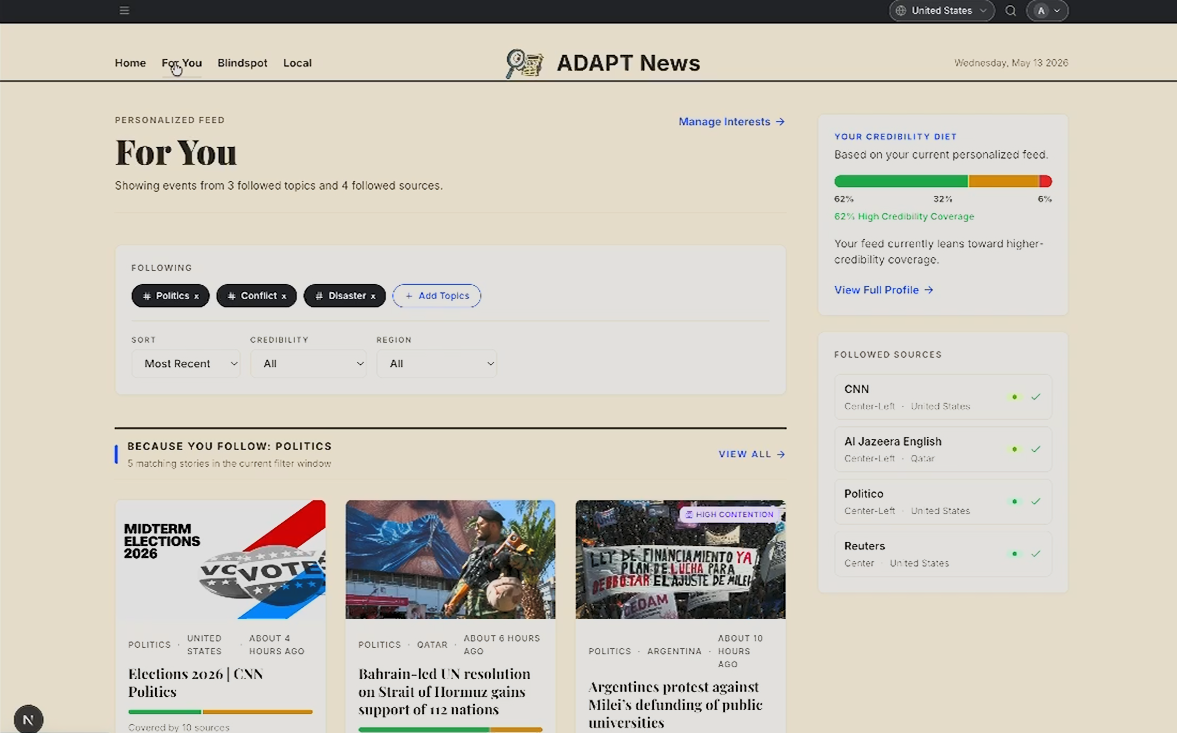
Engage with personalized recommendations based on topics and events you follow.
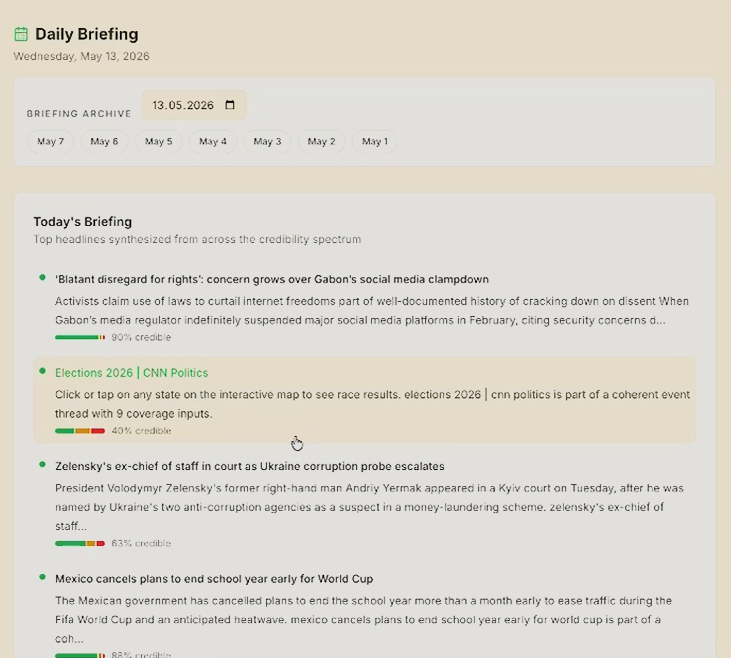
Receive synthesized summaries of the day’s most critical events and distill long, multi-layered developments into concise overviews using sophisticated language models.
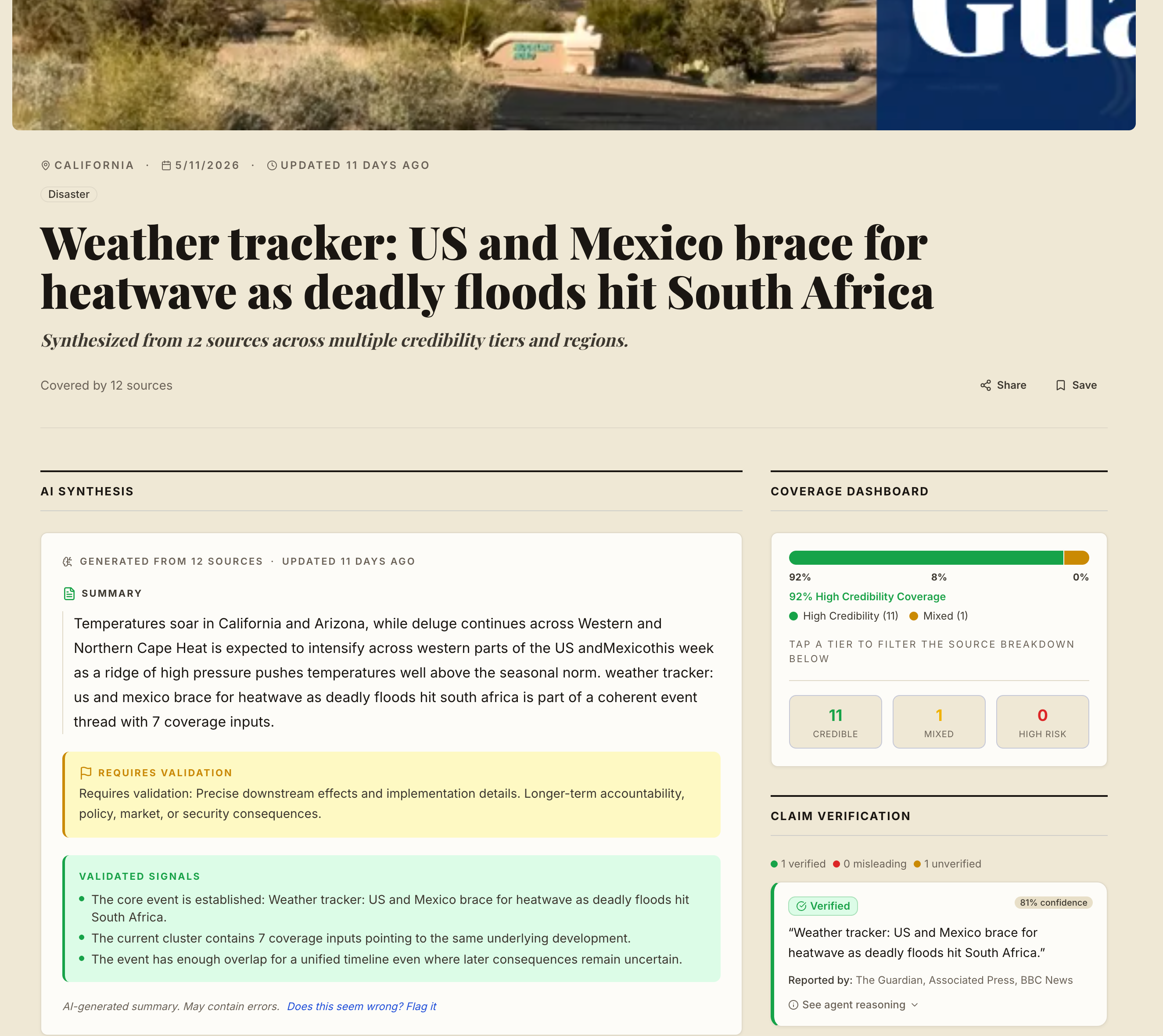
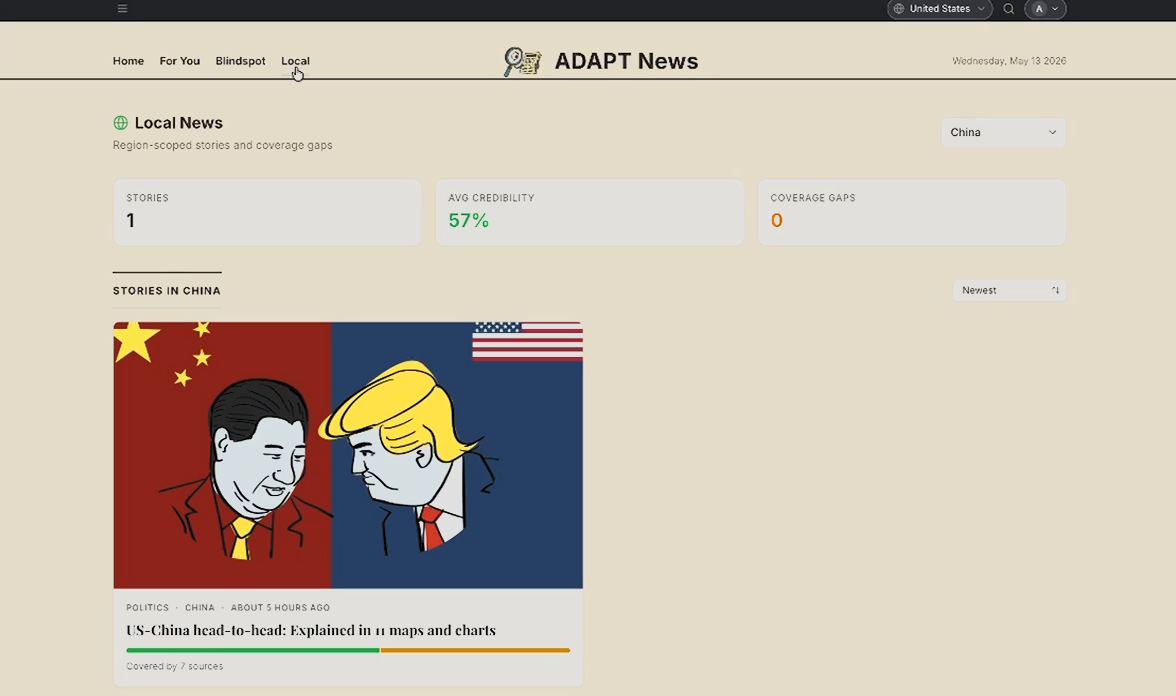
Keep track of regional events prioritized according to geo-relevance alongside global affairs.
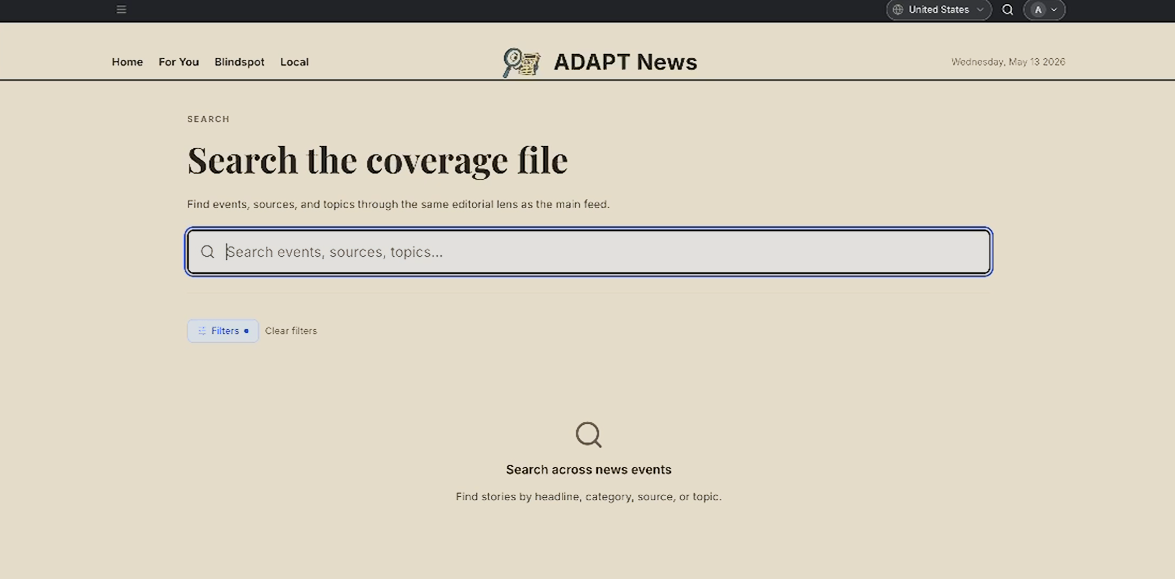
Quickly locate related events, publishers, and verified claims using context-aware querying.
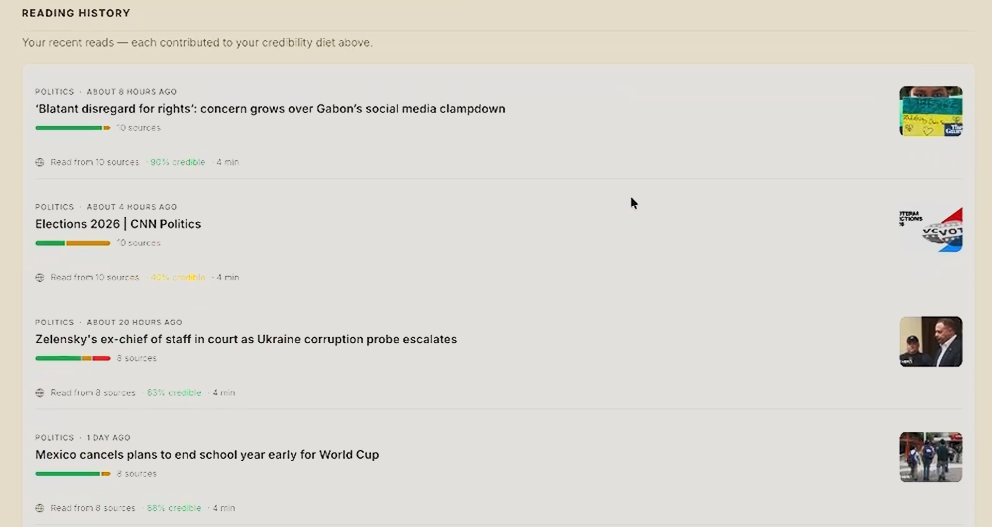
Browse previously viewed stories to see how claims have been updated over time.
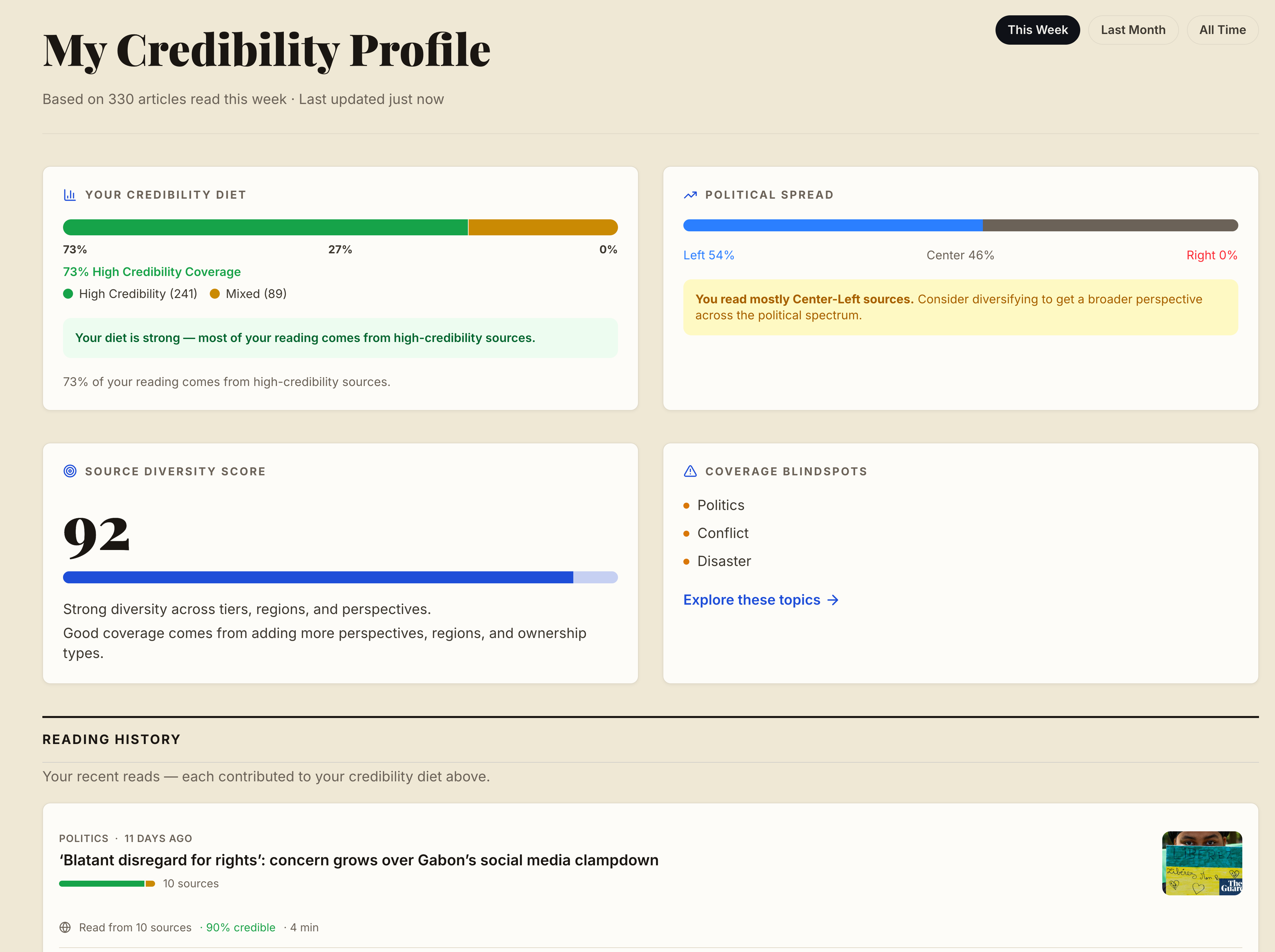
Adjust credibility thresholds and interface settings to fit your preferred mode of verification.
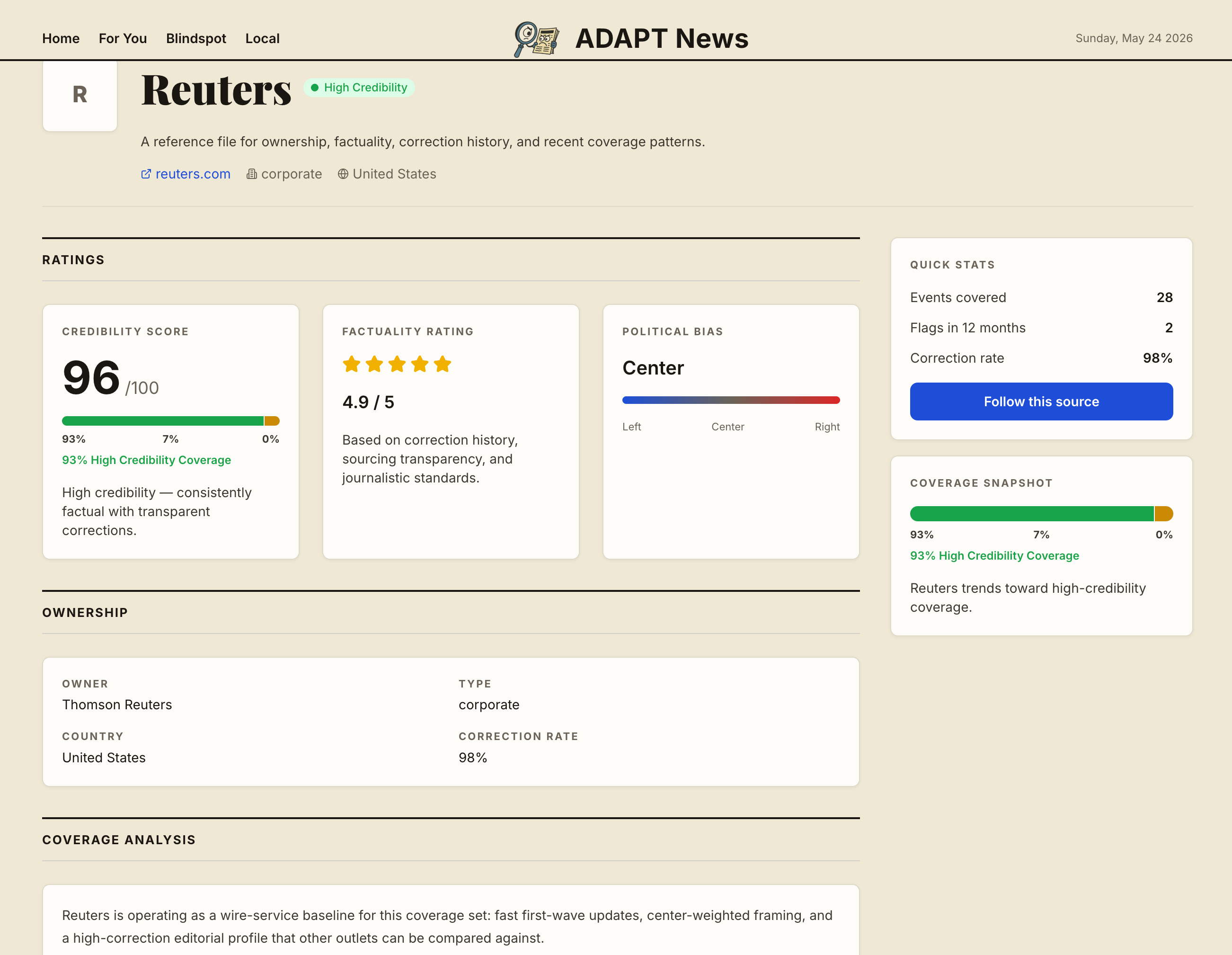
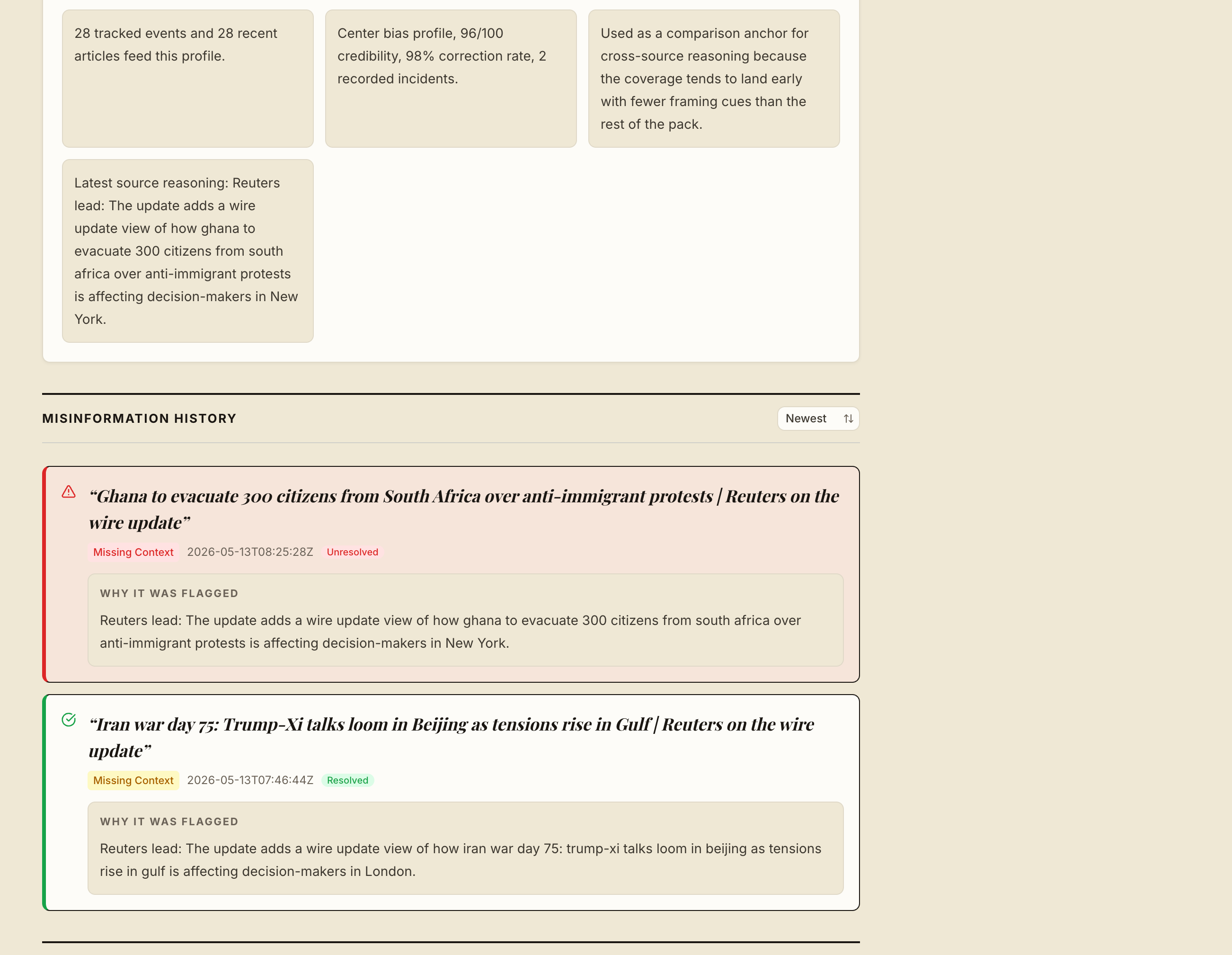
Review the historical credibility, ideological leaning, and detailed track record of individual news sources like Reuters before trusting their coverage.
Understand exactly how credibility scores are calculated with full visibility into the agentic scoring methodology.
ADAPT is built on a modern stack designed to handle high-velocity data ingestion, concurrent agentic reasoning, and real-time frontend delivery.
A dedicated Crawling Agent ingests RSS feeds and raw publisher pages, normalizing the data into a Shared Crawl Database (SQLite) containing events, articles, and image stores.
An Agent Orchestrator processes pending and stale events, routing them to specialized pipelines for fact verification, temporal dispute analysis, and multi-source synthesis.
Claims are argued in an adversarial network: Prosecutor and Defence agents build cases using Tool Knowledge Graphs, while a Judge moderates and a Jury Panel casts majority votes.
A scalable Next.js App Router surfaces the Court Records (artifacts, evidence, rulings) through dedicated API routes to dynamic user interfaces like Daily Briefings and Blindspot detection.