Problem
People who exercise at home often lack guidance on whether their posture and movement range are correct. Generic workout videos show what to do, but they do not evaluate the user's own performance.
PoseTrack helps home workout users compare their movement against a reference exercise video, receive understandable form feedback, and tracks improvement over time through scores, analytics, and gamification.
Product overview
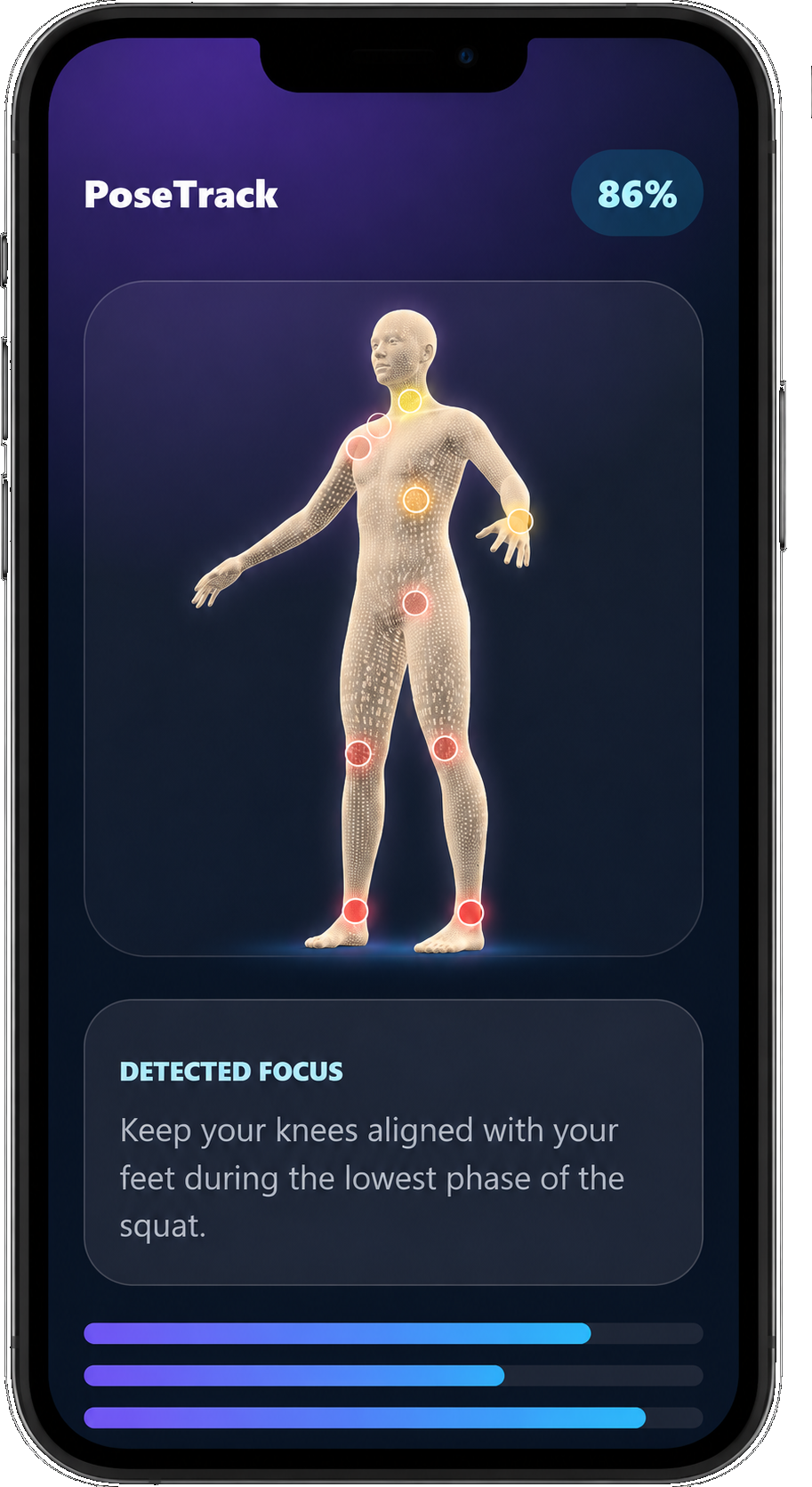
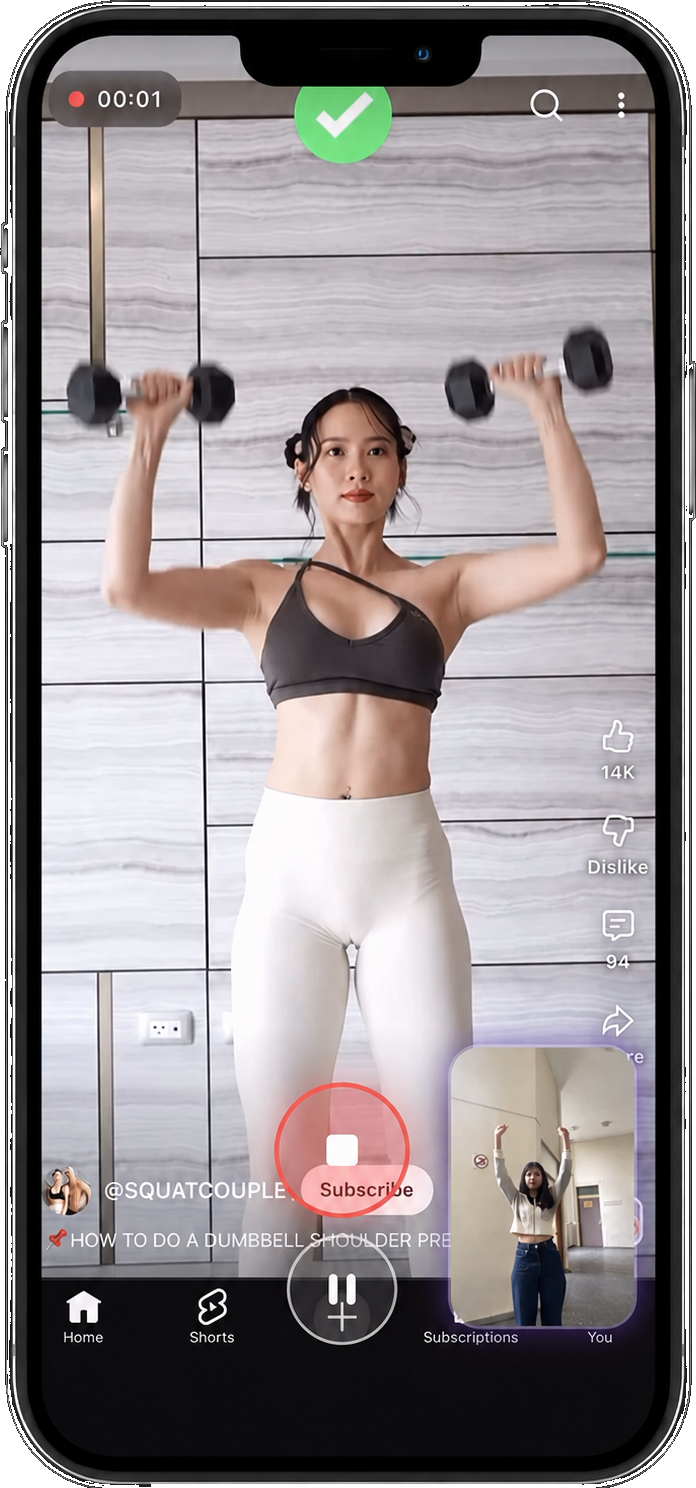
PoseTrack is a mobile fitness analysis application. Users upload a reference exercise video, record themselves performing the same movement, and receive both visual and textual feedback about how closely their form matches the reference.
People who exercise at home often lack guidance on whether their posture and movement range are correct. Generic workout videos show what to do, but they do not evaluate the user's own performance.
PoseTrack turns video into structured motion data, aligns the user's movement with a reference sequence, computes joint-level differences, and presents the result as useful feedback, scores, and progress reports.
Demo area
This demo video demonstrates how our product is presented to the end-user. Click on the play button to see how PoseTrack works.
Master features

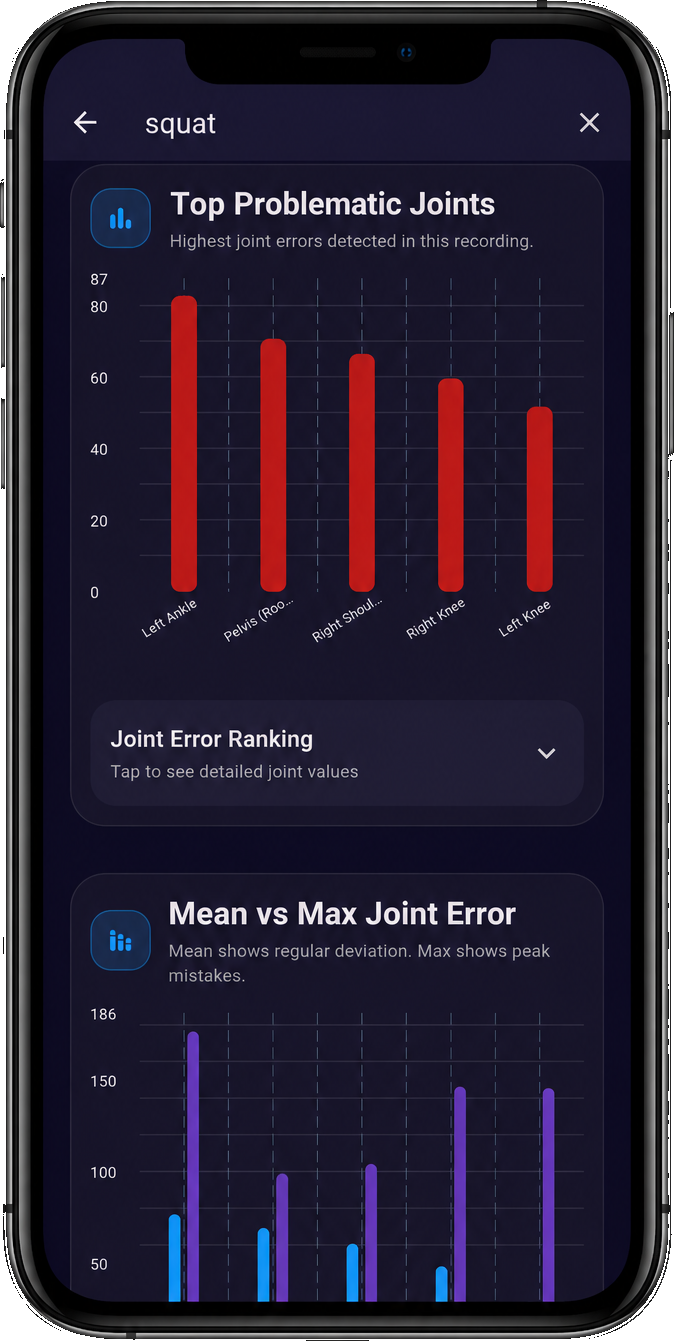
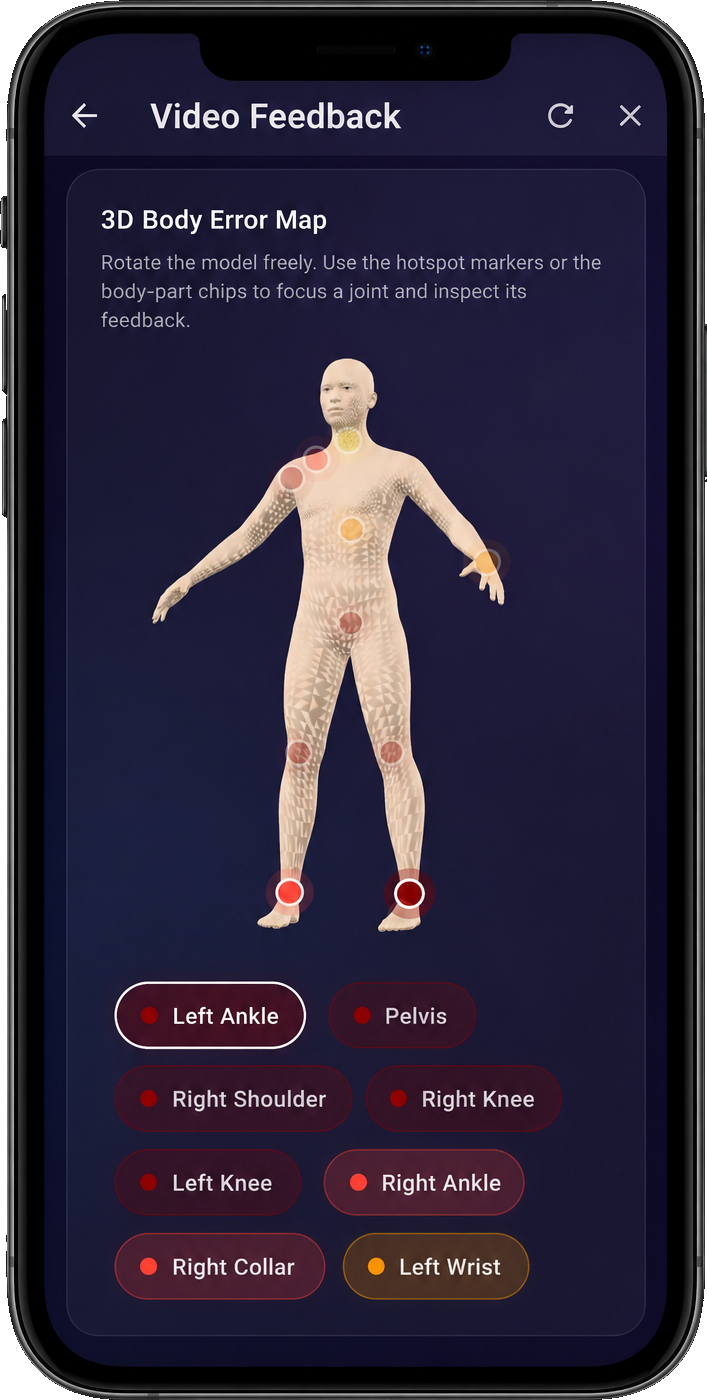
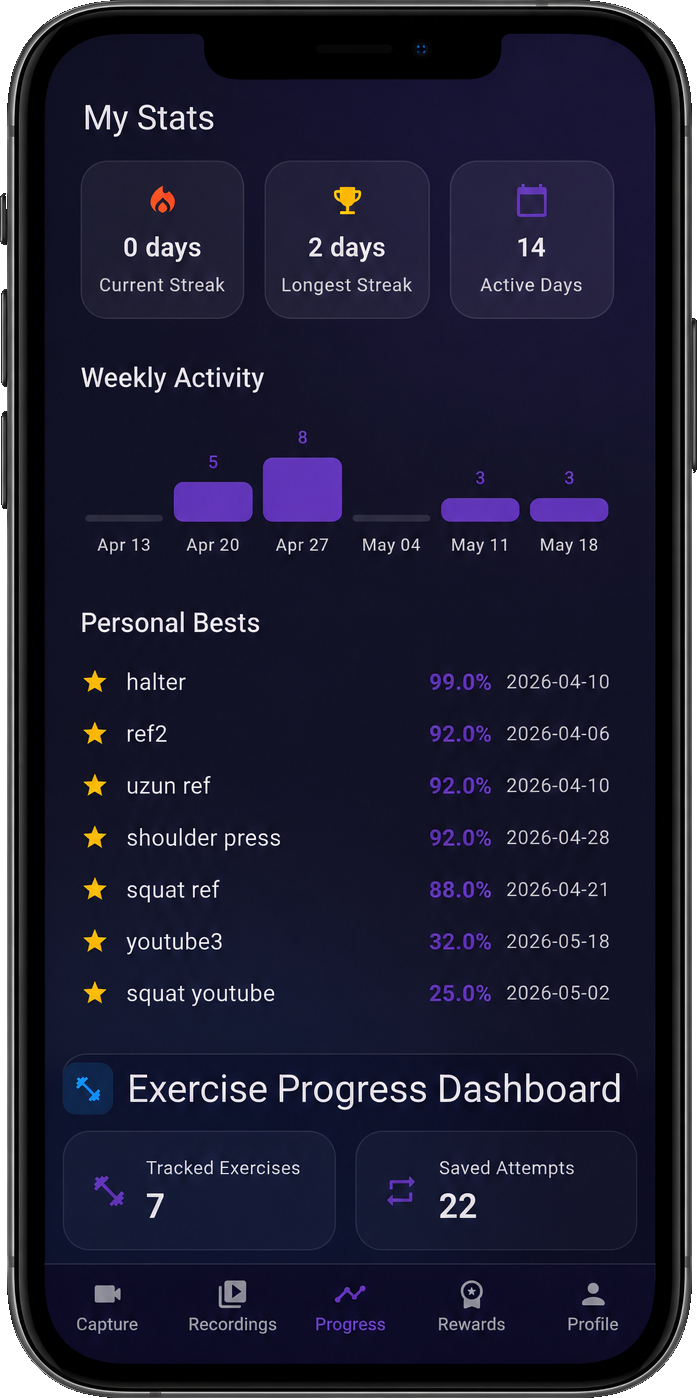
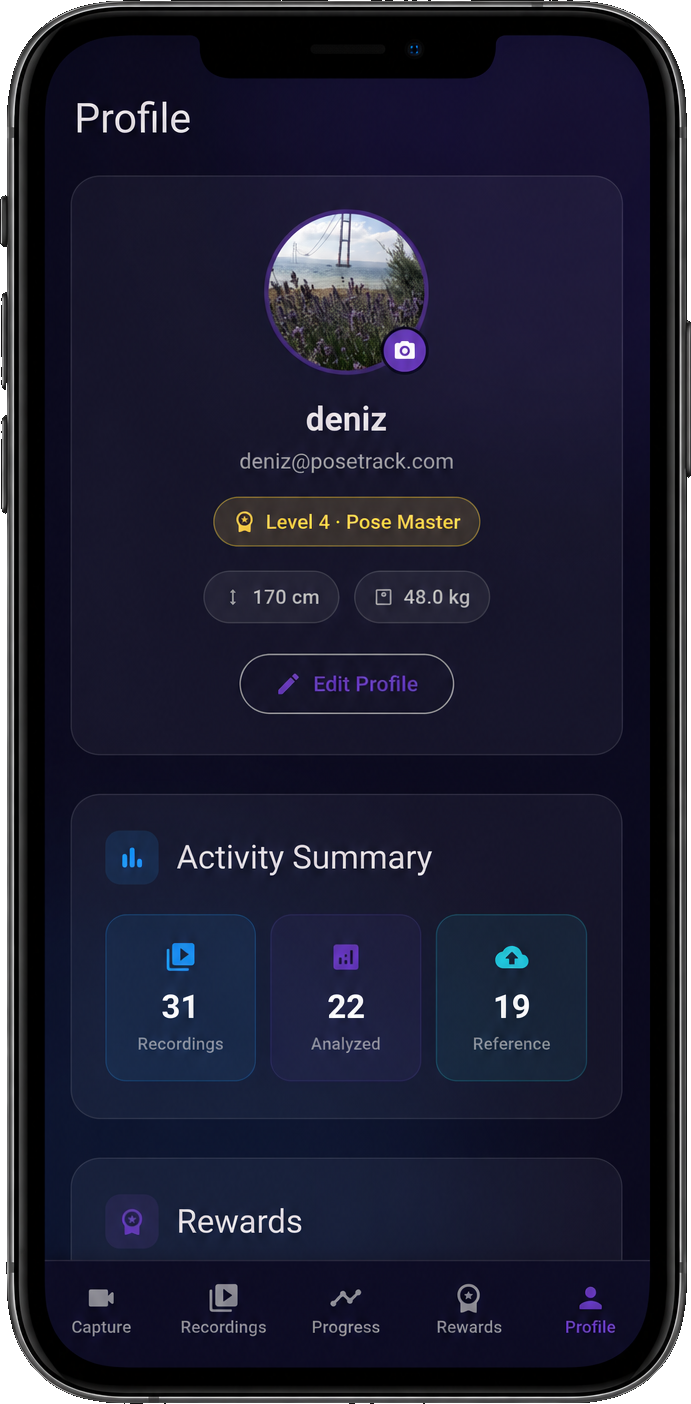
Core algorithms & technologies
PoseTrack combines a Flutter mobile app, backend services, cloud storage, and a Python-based motion analysis pipeline for 3D exercise feedback.

Exercise videos are converted into structured 3D body motion data so the system can reason about body pose, joint rotations, and form deviations.

Frame extraction, pose output parsing, temporal alignment, scoring, and feedback payload generation are implemented in Python.

Pose estimation models run in a Python + PyTorch environment, enabling heavier computation outside the mobile device.

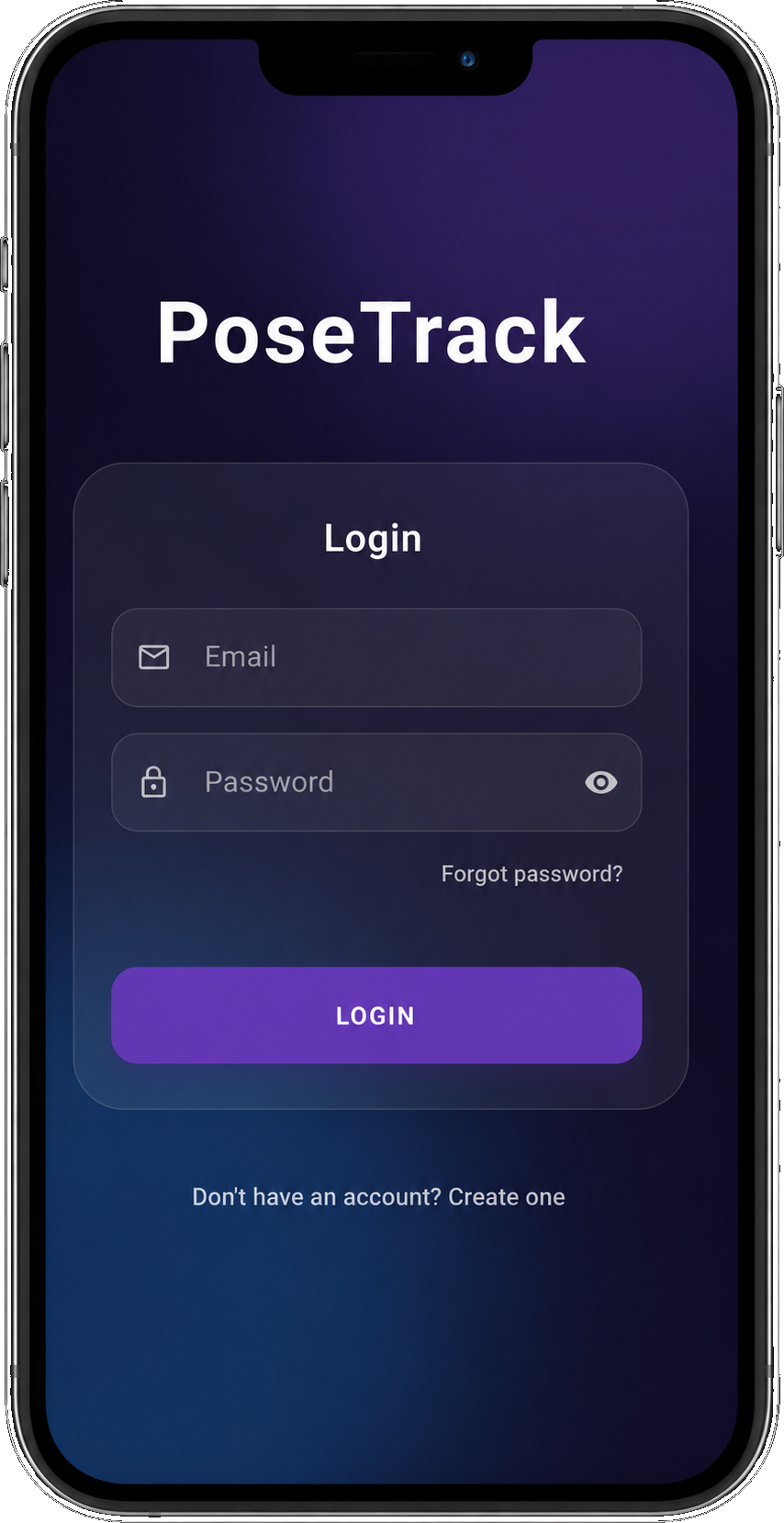
The app handles authentication, video input, camera recording, score screens, progress reports, and feedback visualization.

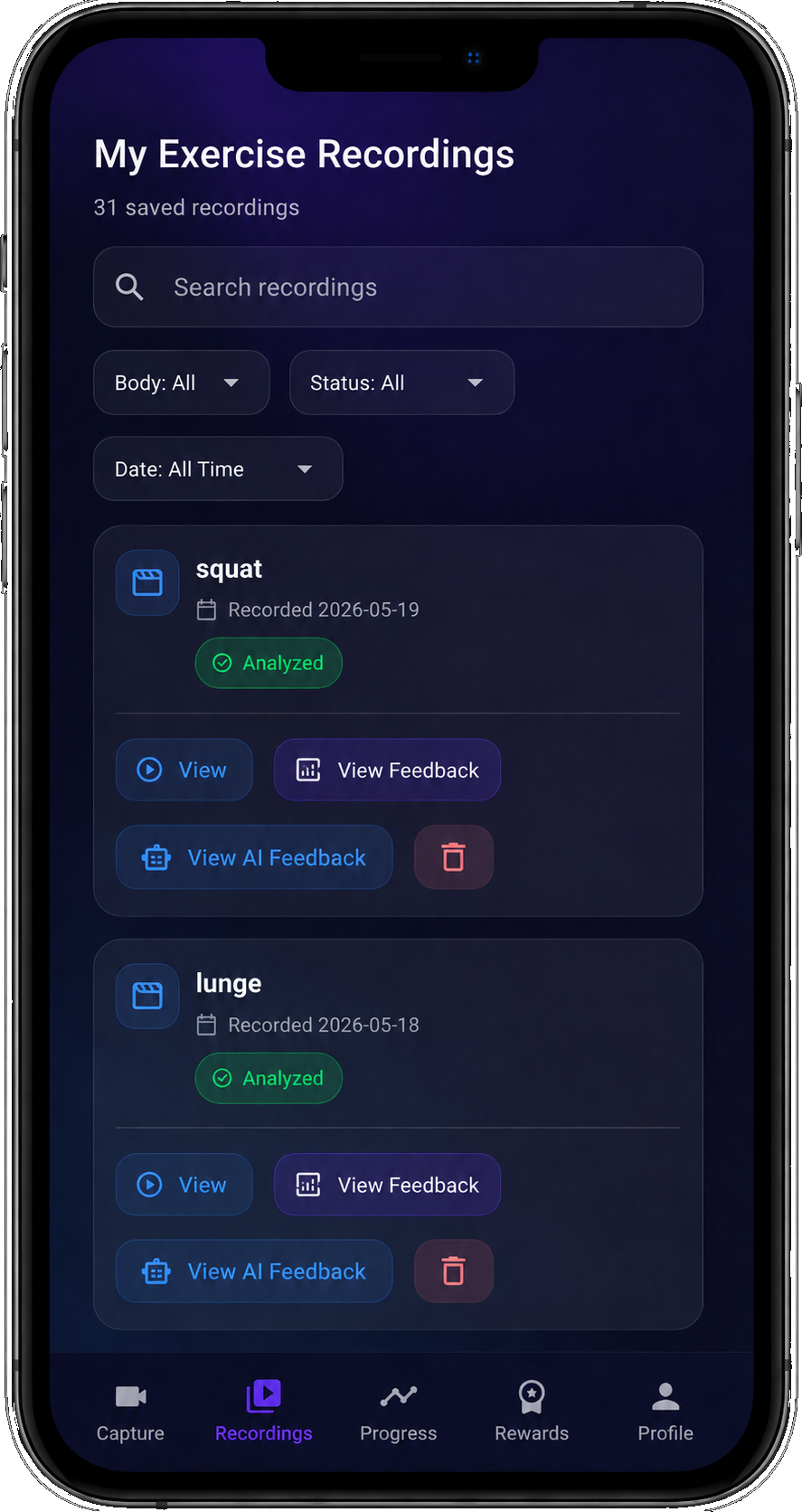
Uploaded and recorded videos can be stored securely, while processed analysis outputs remain available for dashboards and history views.
Structured comparison results are converted into user-friendly explanations and actionable exercise advice.

LLM-generated feedback is converted into natural-sounding speech using ElevenLabs, so users can hear corrections and coaching cues without taking their eyes off their form.
Technical pipeline
PoseTrack combines mobile UX, backend orchestration, GPU-based analysis, numerical comparison, and feedback generation.
Reference upload and user recording are collected from the app.
SMPL-like joint rotations and body parameters are produced.
Sequences are matched and compared with joint-level metrics.
Scores, charts, visual highlights, and natural language advice are shown and read aloud via text-to-speech.
The analysis module compares corresponding joints over aligned frames. Rotation-based differences, aggregate statistics such as mean/RMSE, and severity thresholds are used to detect which body parts need attention.
Numerical outputs are structured as JSON so they can be consumed by the mobile UI, visualization layer, and optional LLM-based explanation module without tightly coupling the components.
System architecture
The end product is organized around a mobile client, backend services, storage, and an analysis pipeline that can run heavier computation outside the device.
Flutter UI · camera · video upload · feedback screens · progress dashboard
Authentication · video metadata · result retrieval · user history
User profiles · videos · processed outputs · performance records
Frame extraction and data normalization
3D pose estimation, temporal alignment, SO(3)-based comparison
Scoring, deviations, visual mappings, LLM text generation, text-to-speech audio output
Project outcome
PoseTrack evolved from research and prototyping into an integrated mobile product with analysis and feedback components.
Investigated SMPL-based models, output formats, GPU requirements, and alternatives when latency became a concern.
Implemented core mobile flows for authentication, video input, camera usage, and result visualization.
Developed alignment, joint comparison, scoring, and structured output logic for visual and textual feedback.
Added progress summaries, streak-oriented motivation, and dashboard elements to encourage consistent training.
Team
Contact Us:
posetrackapp@gmail.comPoseTrack